

The place to visit
Commit to C.A.R.E. is the place to access science-based information about infectious diseases and how to reduce their spread in the workplace.

The place to act
Commit to C.A.R.E. is the place to learn how to make built spaces safer from infectious diseases.

The place to share
Commit to C.A.R.E. is the place to share resources and knowledge on infectious diseases and how to protect workers and our communities better.
Our Impact
We believe in awareness, advocacy, and action.


Offering science-based resources
At Commit to C.A.R.E., we provide reliable resources regarding infectious disease transmission.

Delivering action plans
At Commit to C.A.R.E., we share safe and practical action plans and recommendations to prevent the transmission of infectious diseases.

Making the built environment safer
At Commit to C.A.R.E., we strive to make the built environment and people in them safer from the spread of infectious diseases
Our values
C.A.R.E. is an acronym that reflects the principles of Community, Awareness, Responsibility, and Equity. We are committed to delivering clear, science-based education to help protect the communities where we work and live.
1. Community: We acknowledge and address hazards affecting worker health and the surrounding communities in which people work and live.
2. Awareness: We create awareness about the hazards caused by infectious diseases; we strive to establish control strategies to mitigate infectious disease risks.
3. Responsibility: Collectively, we all have a responsibility to safeguard the health and well-being of workers in any setting. It is our obligation to protect our most important asset, people.
4. Engagement: We ensure everyone seeking science-based guidance can ask questions, contribute as thought leaders in our publications, and serve as stewards in their communities
Our Team
The Intergrated Bioscience and Built Environment Consortium bridges the gap between science and real-world application so people can feel safe gathering together again in indoor spaces.

The Integrated Bioscience and Built Environment Consortium bridges the gap between science and real-world application so people can feel safe gathering together again in indoor spaces.
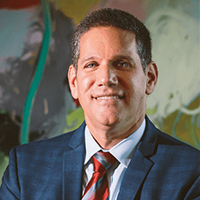
Lawrence Sloan, MBA, FASAE, CAE
Chief Executive Officer, AIHA
Beginning his career as a chemical engineer and later earning his MBA, Lawrence entered the non-profit sector more than 20 years ago. He led two chemical trade associations before joining the American Industrial Hygiene Association (AIHA) as its CEO in 2016. AIHA is a $16 million organization that oversees: three LLCs, two foundations, and an allied association called the Product Stewardship Society. Under his leadership, the organization has rebranded itself and embarked on numerous new initiatives to strengthen the profession and the association for years to come.

Ken Martinez, CIH
Chief Science Officer, IBEC
Ken is an Environmental Engineer and Certified Industrial Hygienist with experience in leading and conducting large-scale research, managing programs in occupational safety and health and emergency response, and creating and teaching professional development courses.
He has more than 33 years of CDC expertise in hazardous agent exposure characterization and mitigation control practices in the manufacturing and healthcare industries. Since retiring from CDC, he served eight years in the CBRN space as a consultant focusing on a national bio-detection program. Mr. Martinez is a recognized subject matter expert in biological agents, including infectious disease and bioterrorism agents.